Are Polycarbonate Enclosures Safe for Outdoor Use?
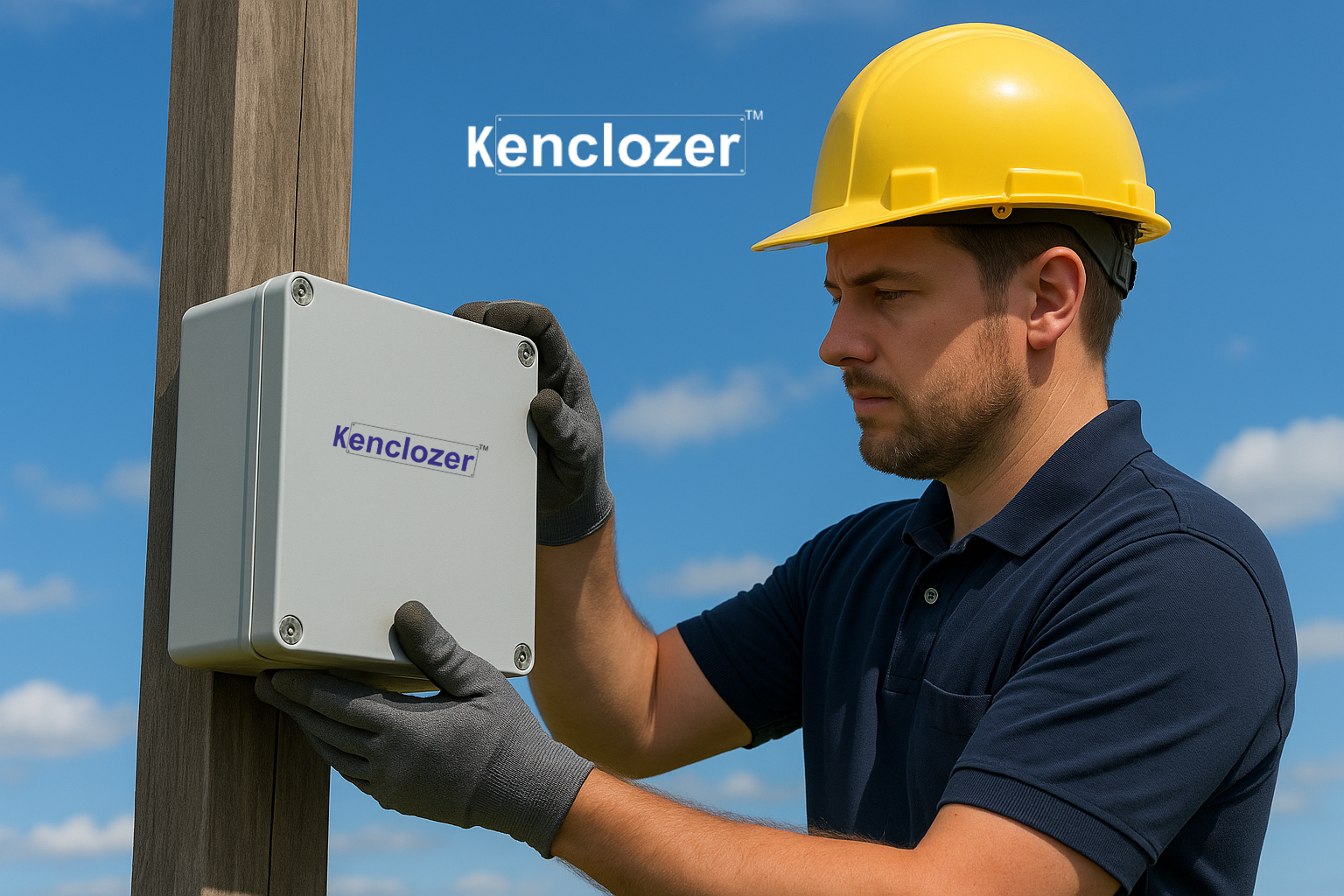
In the modern, highly developed industrial and infrastructure environment, machinery and equipment are no longer restricted by the safe indoor environment anymore. Outdoor applications such as solar systems on the roof, security systems on the highway, and control boxes on the wind farms are becoming the order of the day. Along with this will come the requirement to have enclosures that can endure the elements, aka heat, rain, dust, and UV radiation, as well as hard knocks.
Out of the large variety of materials that are used to enclose something, polycarbonate enclosures have become one of the prospective candidates in the outdoor market. However, are they really reliable? Are they actually able to hold their own in the uncertain harshness of the outdoors?
Now it is time to take an in-depth look at the characteristics, advantages, and limitations of polycarbonate enclosures in a bid to answer the question:
Are they really safe for outdoor environments?
What Is a Polycarbonate Enclosure?
Polycarbonate is a brand of super/high-performance plastic, which is extremely strong, transparent, and resistant to heat. It is popular in challenging industries: aerospace, automotive, electrical, and electronics.
A polycarbonate enclosure refers to a protective box or case that is made out of this hard-wearing material that is used to contain the electrical parts, circuit boards, switches, and other delicate devices. They are frequently observed in exterior installations where they are subjected to the environment.
Why Polycarbonate Enclosures Excel in Outdoor Conditions
1. UV Resistance: Built for the Sun
Among the greatest problems of any outdoor enclosure is ultraviolet (UV) light. Plastics should avoid sunlight because they may crack, become brittle, or fade into a yellow color.
Polycarbonate enclosures are UV regulated, i.e., they are UV-ray resistant by being subjected to UV-blocking or UV-absorbing additives. That stops the premature aging, keeps the color, and ensures structural integrity with time.
Solar farms, rooftop systems, and telecom systems operating in remote areas are ideal.
2. Weatherproof and Waterproof Performance
Outdoor environments are unpredictable. Rain, snow, fog, and dust storms—your enclosure must withstand them all.
Polycarbonate enclosures are usually IP66, IP67, or even IP68 rated according to the Ingress Protection (IP) rating.
- IP66: Dust-Tight, protection against adverse impacts of water jets
- IP67: Completely dustproof, withstands even immersion in water (1 meter)
- IP68: It can be used under any kind of sustained submersion (depending on the conditions)
This makes them very good when used in outdoor electrical installations, where moisture intrusion would introduce corrosion, short circuits, or failure.
Superb on outdoor lighting controls, irrigation systems, maritime utilities, and EV charging stations.
3. Extreme Temperature Resistance
Installations outdoors are usually pushed to the extreme swings of temperatures, particularly in the winters that are as cold as they could be and in the boiling summers.
The operating temperature range of polycarbonate enclosures is wide, eg -40 to +120 [degC] or higher, depending on the particular manufacturer.
They are not warped and do not crack in high temperatures and provide the same performance under hot and cold conditions.
Ideal in mountains, deserts and in industrial belts.
4. High Impact Strength and Shock Absorption
Have you guessed that polycarbonate is 250 times stronger than glass and nearly unbreakable in normal terms?
Enclosures made of polycarbonate are shock proof or rather shock absorbing, and have a high resistance to impact, thus they can resist:
- Accidental drops during installation
- Impacts from falling tools
- Vandalism or harsh handling
- Debris from storms
Most of the models feature ratings of IK08 or above, which can protect them in harsh places.
Met standard in transport centers, bus stops, and other road installations.
5. Corrosion and Rust-proof
Though polycarbonate can prolonged state of conditions of moisture, salt air or chemicals, it does not corrode or rust like steel or aluminum.
This is why polycarbonate is perfect in coastal areas, at chemical plants, and even in wastewater plants where the other kinds of enclosures would tend to corrode within very little time.
Applied in off shore plants, desalination systems, and farm lands.
6. Lightweight and Easy to Install
Although polycarbonate is hard, it is lighter thus easier to carry, move and fixed by the installers without using heavy placements and other supporting frameworks.
This also helps in cutting down the costs and time required to make installation which in places like heights, and remote places are a great exposure.
Preferred in the telecom towers and renewable energy projects.
7. Electrical Insulation
Polycarbonate is naturally insulating, with no metallic component at all, further providing a barrier to electric shock accident or arc flash danger.
This improves its safety when putting it near live circuits and an additional safety measure to technicians and end-users.
It is handy in control panels, battery enclosures and network cabinets.
Principal Certifications to Seek
When looking to buy an enclosure, you want to make sure it is of high quality and can be used outside. The following are the certifications to look out.
| Standard | What It Means |
|---|---|
| IP66 / IP67 / IP68 | Protection against dust and water ingress |
| UL 94-V0 | Flame-retardant, self-extinguishing plastic |
| IK08 / IK10 | Impact resistance rating |
| RoHS / REACH | Compliant with environmental and chemical safety standards |
| UL 746C | UV resistance for outdoor use |
Real-World Applications
- Telecommunication towers
- Solar PV junction boxes
- Smart traffic management systems
- Remote sensor housings
- Agricultural automation
- Smart city infrastructure
- Highway and railway signaling systems
FAQs
Conclusion: A Smart Choice for the Outdoors
Then, are polycarbonate enclosures suitable to use outdoors? The question is why is this a resounding YES!
They are designed to survive and to surpass outdoor conditions. UV rays, rainstorms, physical impacts, or extreme temperatures, whether you are fighting any of them, polycarbonate will give you a reliable and durable solution and it is also safe.
When you have some outdoor installation ahead and want to get some peace of mind, then you should consider using a polycarbonate enclosure that has been well designed, certified, and customized according to your requirements.