The Role of Enclosures in Solar Safety and Performance
Solar energy evolution worldwide was a significant step towards a cleaner future. With the extension of solar power units-from small residential rooftops to vast industrial solar farms-the focus on safety and efficiency has become a priority. Enclosures are the often-ignored, but absolutely necessary, safety devices that also ensure the best performance of solar systems.
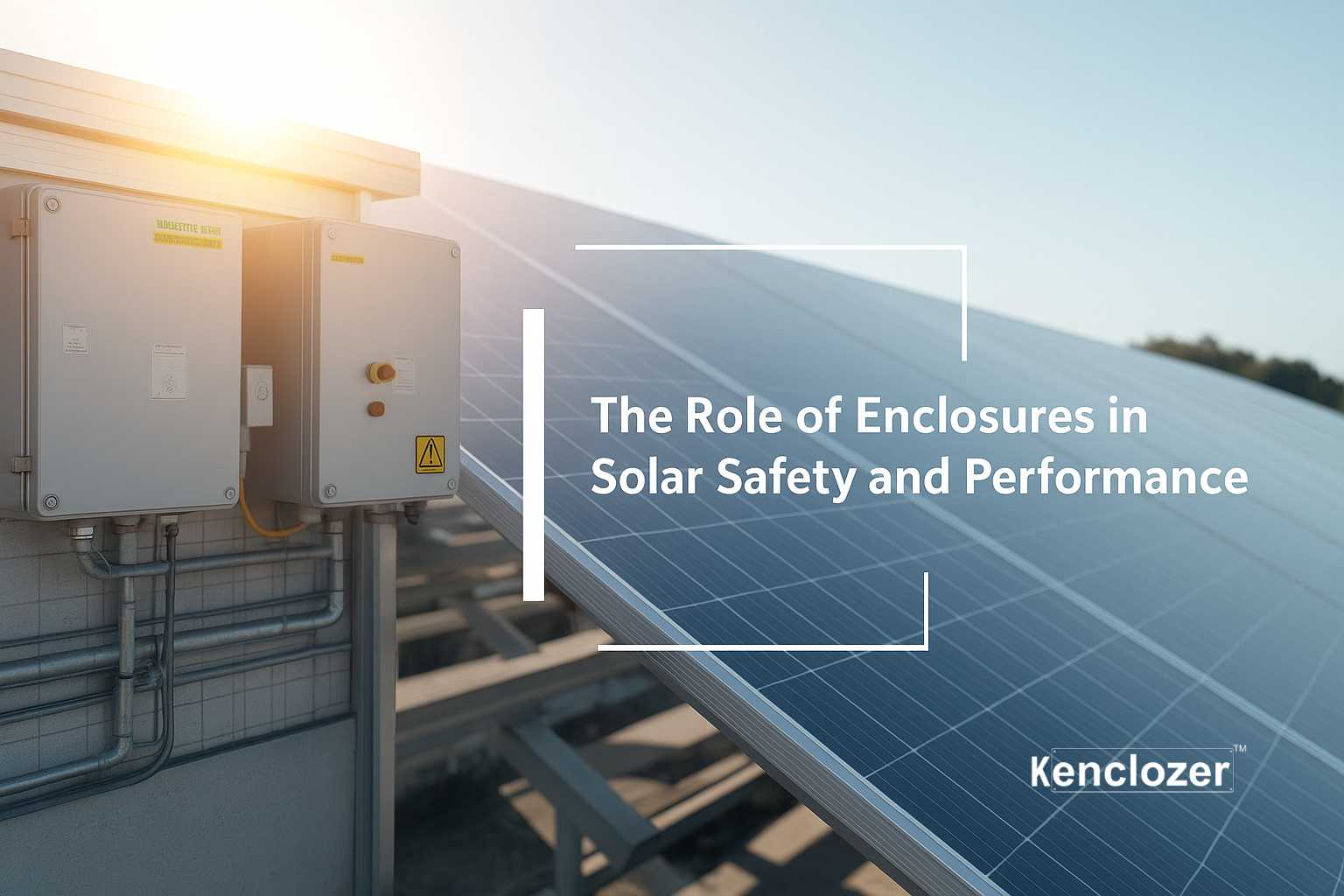
Enclosures, or junction boxes/electrical enclosures as they are also known, are the protective shells that house the most delicate parts of the electrical devices in a solar system. From shielding the system against weather elements to ensuring the safety of people, enclosures are a must-have in a solar installation. We at this blog, will discuss the significance of these enclosures, their kinds, and how they become the efficiency and reliability factors of the solar energy systems in total.
What Are Solar Enclosures?
Solar enclosures are considered as protective outer casings that are installed to house a variety of components like junction boxes, inverters, fuses, wiring, and other sensitive parts of a solar panel system. Also, the enclosures serve as a protection layer from various atmospheric agents such as dust, moisture, ultraviolet radiation, chemicals, and temperature changes, all of which slowly but surely can cause the deterioration of electronic components.
If there were no enclosures, solar installations would be exposed to short circuit, rust and eventual electrical shock situations, thus endangering safety and energy production as well.
Why Enclosures Are Essential for Solar Safety
1. Protection Against Electrical Hazards
Solar panels produce power, and the current that is flowing through the system can, if not properly controlled, seriously injure people or even cause a fire. Enclosures serve as barriers that prevent people from unintentionally coming into contact with live wires and other electrically charged components, thereby reducing the chances of electrical shock and fire.
2. Weatherproofing and Environmental Protection
Solar installations are usually placed in open areas, meaning that the parts are exposed to rain, dust, snow, and UV rays. Superior enclosures have been tested and proven to have the capacity to keep water and other elements out and they are also resistant to rust. Products such as polycarbonate, stainless steel, and powder-coated metals are widely used in the solar industry to make sure that the system can endure extreme weather conditions.
3. Fire Prevention
On one hand, overheating and, on the other hand, electrical faults can be the causes of a fire. Enclosures made of heat-insulating materials are effective in muffling the noise created by the flash or the heat that builds up, making sure that it is not capable of setting fire to the surrounding area. There are also some enclosures equipped with ventilation that helps in the easy release of heat.
4. Longevity of Solar Components
If electronic devices are kept in a good environment with no stress, their lifespan will be longer. The right enclosures are the main reason behind wires, connectors, and printed circuit boards not being degraded prematurely, which is directly linked to less maintenance costs and better performance in the long run.
How Enclosures Improve Solar Performance
1. Keeping Electrical Efficiency
The change of the electrical system through a bad protection can lead the system to suffer from oxidation, short circuits, and component failure - all of these lower the total energy output. Solar systems become more efficient and reliable by operating under optimal conditions in the enclosure.
2. Cutting Downtime and Maintenance
The efficiency of the solar installation can be so low as a result of frequent repairs or component replacements caused by environmental damage to which the solar installation is exposed. Enclosures eliminate such risks leading to a stable and uninterrupted energy generation process.
3. Enabling System Monitoring
Nowadays, enclosures are usually equipped with such monitoring devices as sensors and smart controllers. By providing a safe place to these devices, enclosures allow accurate system diagnostics, remote monitoring, and predictive maintenance, which still performance.
Types of Solar Enclosures
1. Junction Boxes
These are the most basic enclosures used in solar panels. They consolidate multiple wires into a single housing and protect connections from environmental factors. High-quality junction boxes often include bypass diodes to prevent power loss due to shading.
2. Combiner Boxes
Combiner boxes are basically the point where wires of different kinds from a solar panel system are connected to one final output. Additionally, they have fuses and surge protection devices to prevent the system from being damaged due to electrical faults.
3. Inverter Enclosures
Inverters are the devices that make the AC power which is compatible with the house or the grid by feeding the DC power that comes from the solar panels. Inverter enclosures are the parts that protect the vulnerable components from the weather or any kind of shock.
4. Custom and Industrial Enclosures
In case you have a very distinctive or an extensively large kind of installation, you may get custom enclosures that will not only fit your requirements perfectly but also come with such features as ventilation, heat control, and premium security.
Material Choices for Solar Enclosures
The material that the enclosure is made of has, by far, the greatest impact of the lifespan and performance of the enclosure. Basically, these are the materials:
- Polycarbonate: A light polycarbonate is proven to resist UV rays and remains rust-free. Therefore, it is the best material for the housing and solar panel rooftop installation.
- Stainless Steel: Being it is durable and resistant to rust, it is the most suitable location resource for heavy-duty or seaside areas.
- Aluminum: Being it is of light weight and a good heat conductor, it is the most efficient way of heat dissipation.
- Fiberglass Reinforced Polyester (FRP): It has excellent chemical resistance and is sturdy enough for the outdoors.
Choosing the right material is very important if one wants to make a good cost, durability, and safety compromise.
Installation Considerations
It is proper installation of enclosures that is just as vital installation of their selection:
- Location: Do not locate the enclosures where the heat is hot, direct sun light (without ventilation) or where the humidity is high.
- Accessibility: will ensure that enclosures are easy to maintain and inspect.
- Sealing: Pick up right gaskets and seals to prevent the ingression of water.
- Grounding: Good grounding guarantees electrical safety and lessens the risk of electrical faults.
The correct installation of the enclosure is what makes the enclosure a solar component and extends the solar components' lifespan.
Maintenance Tips for Solar Enclosures
- Periodical Maintenance: Inspect the rupture, rust and water infiltration at least twice in a year.
- Clean the Outside: extend the dust, dirt, pieces, which may be sealing or ventilating, out out of the 12.
- Electrical Connections: Wires, fuses and connectors will be checked and ensured that they are in good condition and besides they are well secured.
- Install New Damaged parts: It is necessary to make sure that damaged parts are taken away completely such as gasketing, covers, and damaged wiring that can cause safety risks.
Maintenance minimizes risks of the unexpected failures and solar performance Ό.
FAQs
Conclusion
As a rule, attention and money are mostly going to solar panels, inverters, and wiring when discussing solar energy, but enclosures are the ones that actually stabilize the whole setup by providing safety, extending system lifetime, and enabling system's peak performance. Not only from the viewpoint of shielding the system against the risk of accidents and attacks of nature, but also from the viewpoint of easing system operation, a right enclosure is vital to the solar installation.
Whether you think of yourself as a homeowner who intends to install a rooftop system, or as an engineer who is designing a large solar farm, make it a priority to use top-notch quality enclosures that will not only assure your system's safety but also enable you to reap the benefits of solar energy for a long time.