Why Every Solar Project Needs a Reliable Enclosure System
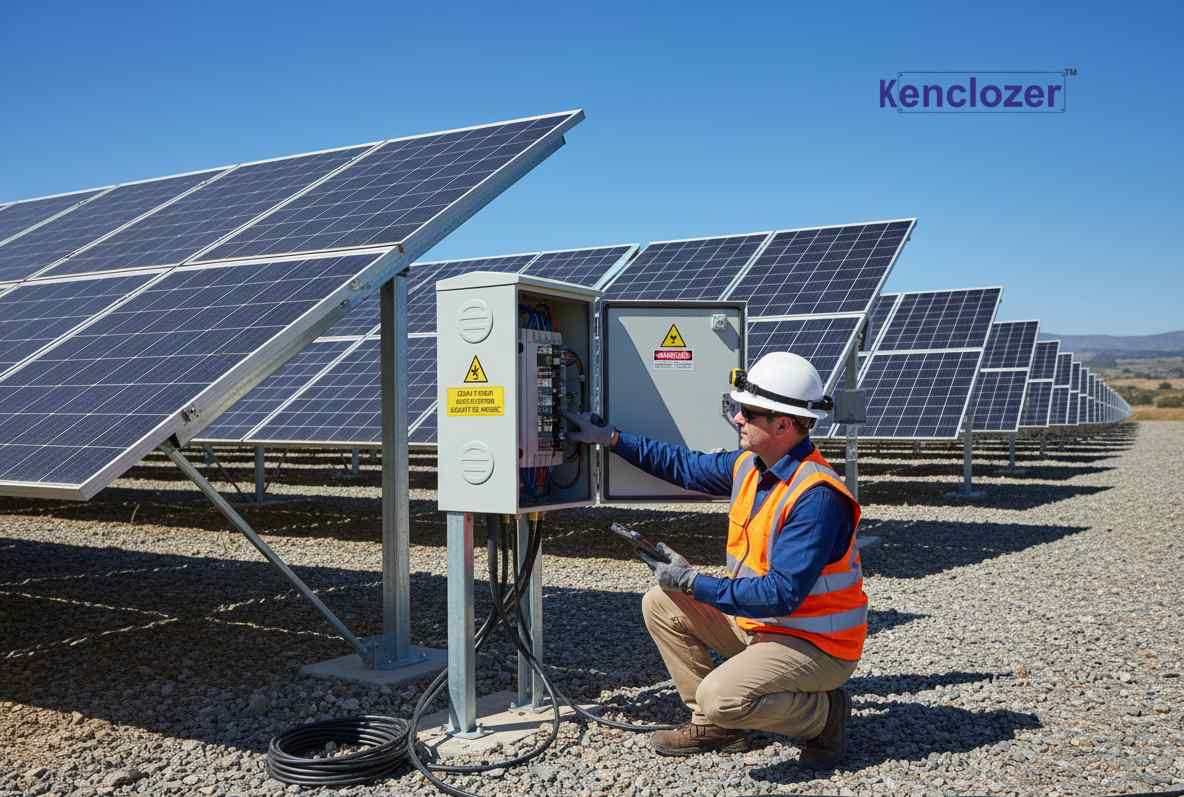
While the solar industry is growing rapidly and sustainability is the buzzword, the question of safety and operational stability remains at the frontline. None of the pieces-whether it is a residential rooftop solar panel or a massive solar farm-should fail to work jointly to ensure a stable power output and a long service life. Enclosures are the protective shells that allow the easy access of the electrical and control equipment while shielding them from the tough environment. So, they are probably the most undervalued components in the whole chain of the solar energy system.
How about we delve into the necessity of an efficient enclosure system for every solar project, the safety and performance improvements it brings, and the factors you should consider when selecting one?
Enclosure Systems: A Necessary Evil?
Basically, an enclosure system acts like a blanket or a safe with the main function of protecting the electrical components it houses. These may be anything from junction boxes, inverters, fuses, SPDs, MCBs, connectors, to circuit breakers. The function of the enclosure is to be a physical barrier that separates the sensitive internal parts from the outside world, thus preventing the ingress of dust and moisture, and also, in general, heat and even to some extent, the protection against an accidental contact.
Solar installations making use of enclosures have them for the following purposes:
- Combiner Boxes - the point where solar strings are linked and safeguarded by fuses and surge protection devices.
- DC/AC Distribution Boxes - the devices that oversee the flow of current and guarantee the safe transfer of power.
- Control Panels - serve as the central hub for monitoring, automation, and communication systems.
The absence of a dependable enclosure system can lead to the premature failure of the weather-exposed solar components that may even be of the highest quality, resulting in loss of performance, increase of maintenance tasks, and safety risks.
Importance of Reliable Enclosure Systems in Solar Energy
1. Protection from Environmental Factors
Most of the times solar systems are subjected to severe outdoor situations, such as high UV radiation, humidity, rainfall, and dust. Without adequate protection, these can gradually eat away at the electrical parts of the system over time.
A good enclosure package guarantees:
- The impeding of UV rays and rust
- Water-tightness against water supply (IP65/IP66 rated)
- The incapability of dust and small particles to enter the system space
Such maintenance of the solar system is imperative to keep the output stable and to prolong the lifetime of the unit.
2. Enhanced Electrical Safety
Absolute safety is the main concern in solar power systems. If the wires are laid bare, the insulation is weak, or moisture is present inside the electrical parts, then the result may be a short circuit, sparks, or the outbreak of fire.
The best enclosure provides the prevention from dangers by being a barrier that keeps away human hands from the high-voltage parts and thus decrease the chance of accidental shocks. Just as well, good enclosures fabricated from fire-resistant polycarbonate or metal materials offer an extra layer of protection in case of heat build-up or malfunctioning.
3. Prevention of System Downtime
The turning off of the whole solar power system due to weather-related damage or electrical failure is a real possibility. This situation results in:
- The loss of energy production ability
- Increment of repair and service costs
- The shortening of return on investment period
The elimination of these threats to a great extent comes through the usage of reliable enclosures that make it safe for the internal units to work even in severe weather conditions. In this way, system uptime becomes a direct yield of better performance and higher profits.
4. Compliance with Industry Standards
Solar projects, as a rule of thumb, are subjected to conforming safety standards at both national and international levels e.g., IEC 61439, IP (Ingress Protection), and IK (Impact Resistance) ratings.
The trusted enclosure system is the one which not only meets the required parameters and is certified for that but is also able to withstand the physical and environmental challenges. Besides safety, compliance with standards speeds up project and inspection stages.
5. Long-Term Durability and Cost Efficiency
The purchase of high-quality enclosures may look like an extra burden at first; however, over time, it turns into a money-saving move. Less expensive or lower-quality boxes may break, become discolored, or lose their sealing capabilities after only a few months of exposure, thus, resulting in the necessity of replacing them again and again.
Material such as polycarbonate, stainless steel, or aluminum made to be long-lasting will not rust for years, thus, ensuring that you will be saving on maintenance and replacement costs in the long term.
Types of Enclosures Used in Solar Projects
1. Polycarbonate Enclosures
Enclosures made of polycarbonate are perfect for outdoor solar applications as they are light, impact-resistant, and non-corrosive. Also, due to their excellent UV stability, thermal resistance, and IP protection, they have become the most commonly used products for combiner and junction boxes.
2. Metal Enclosures
Metallic (mostly stainless steel or aluminum) enclosures give a high level of mechanical strength and very good heat dissipation. They are chosen in solar projects of an industrial or utility scale nature, where durability and grounding are of utmost importance.
3. ABS (Acrylonitrile Butadiene Styrene) Enclosures
Enclosures made with ABS are low priced and trouble-free when it comes to installation. The usage of these products is restricted to indoor areas or places with a mild weather exposition.
Features to Look for in a Reliable Solar Enclosure System
- High IP Rating (IP65/IP66/IP67): IP ratings at these levels would mean that very fine dust cannot get in and the water jets used are from a strong power. So, the protected object is safe.
- UV-Resistant Material: Facilitates the color and keeps the material durable even after a lot of sun exposure.
- Corrosion Resistance: The feature is highly advisable for the people living near the sea or in areas with high moisture content.
- Thermal Management: Temperature changes can be covered with the help of a built-in ventilation system or insulation.
- Easy Installation & Maintenance: With the help of removable covers and cable entries, one can do wiring and the inspection in the board easily.
- Transparent or Opaque Options: When solar enclosures have transparent covers, the installed PV systems can be monitored visually without any interruptions.
- Fire Resistance: The resistance can be termed as one of the main features, which, if the case erupts, will keep the electrical parts from catching fire and ensure the safety of the users.
Benefits of Using Reliable Enclosures in Solar Systems
- Extended Equipment Lifespan: Makes the electronics less vulnerable to water, dust, and rust by tightly sealing the electronic parts.
- Reduced Maintenance Costs: Having less breakdowns and replacements in an organization will lead to lower operational costs.
- Improved Safety: Shelter accidental landing prevention as well as electrical safety.
- Better Aesthetics: By organizing wires and connections, the project looks more elegant.
- Higher System Efficiency: The system's capability will be more consistent and the system will be able to deliver the energy without any stops.
Common Errors Which Should Not Be Done When Choosing Solar Enclosures
- Ignoring the IP Rating: When the IP rating of a box is very low, it indicates that moisture can get into the box and thus, other parts can be damaged.
- Using Non-UV Protected Material: The reason for the material to become yellow and crack gradually and to deform faster when it is exposed to the sun is that the material is not UV protected.
- Incorrect Cable Management: Not having enough space or using the wrong points for cables can have the result of loosening the connections and causing overheating.
- Not Supplying Enough Ventilation: To a great extent, it leads to the occurrence of internal temperature rise and condensation in solar enclosures
- Using Non-Certified Products: The use of these kinds of products may make it difficult for a company to comply with the safety standards which can also lead to a failure during the inspection process.
How a Good Enclosure Improves Solar System Performance
An enclosure system with proper design doesn't solely shield; rather it also adjusts. It keeps the right environment for the parts of the electricity network, stops transmission from being disturbed, and makes sure of stable connections.
With the help of such a device, there is less wear caused by outer forces and the damage inside is reduced as well, therefore, they can achieve higher power output, better operational stability, and a longer lifespan-solar projects main issues.
FAQs
IP65 - The device is completely protected against dust and can withstand waterjets from any direction at low pressure.
IP66 - The device is totally protected from dust and can resist waterjets from any direction at high pressure.
Higher ratings than those (for example IP67) designate the possibilities of temporary water immersion.
Conclusion
An efficient enclosure system should not be considered merely as an additional feature-it is a fundamental element of any solar installation. Its main function is to secure the system safety, reliability, and extended lifespan. Basically, an ideal enclosure, thus, by protection the most sensitive electrical parts from the climate and the typical wear of things, keeps the energy output stable and also the necessary maintenance at a minimum stage.
Definitely, it is worth having your solar system fitted with durable, certified enclosures that are not only suitable for the local conditions but also for the system's design. Small steps taken today can turn out to be the greatest support of your investment and the continuous flow of clean energy for many years to come.